As an organisation committed to gender inequality and focused on supporting women and minorities in academia in Ireland, WIRI (Women in Research Ireland) is involved in a variety of activities related to promoting gender equality measures in the higher education sector.
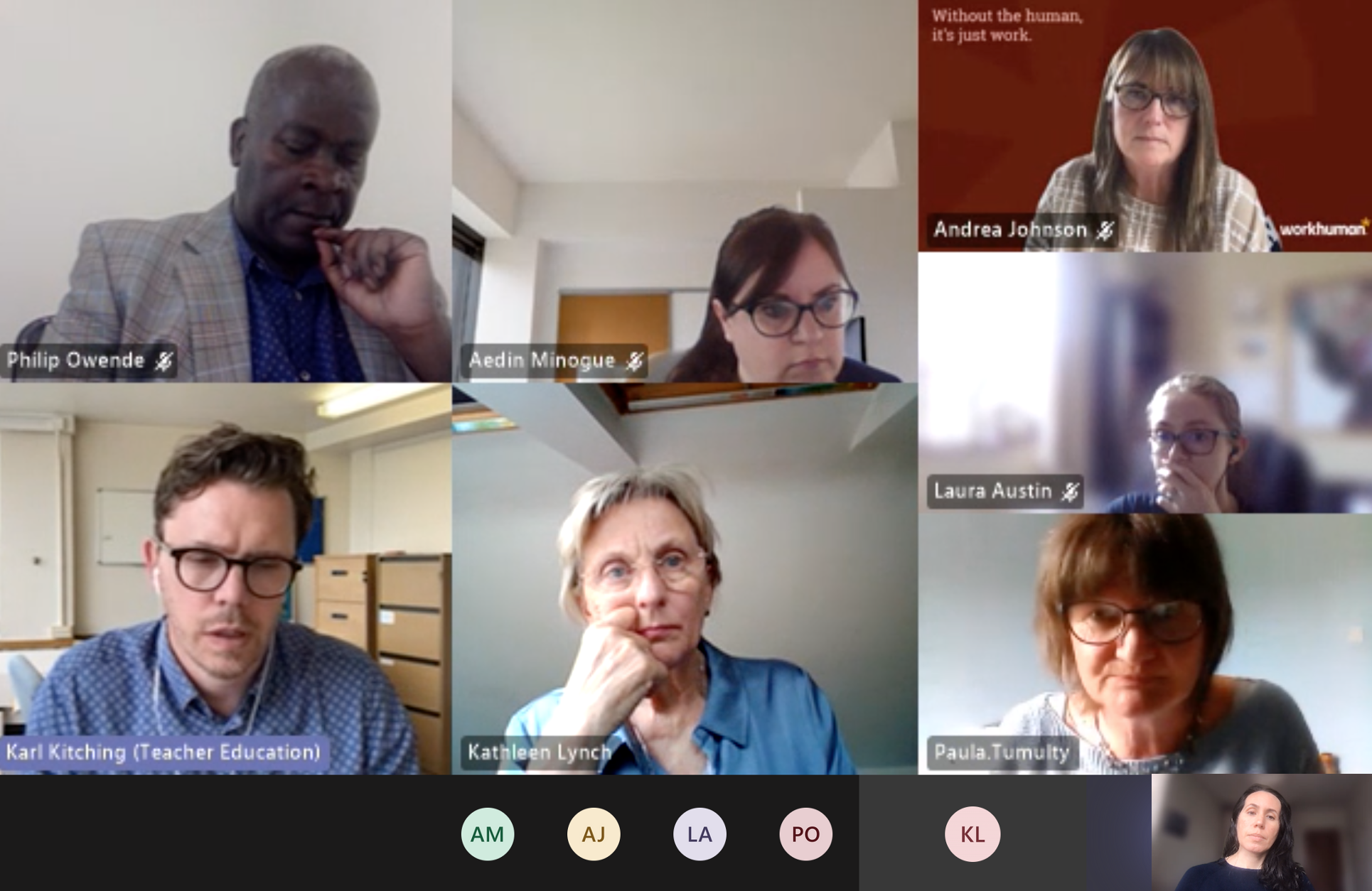
On 9 June 2022, WIRI was invited to address the expert group in charge of the Second Review of Gender Equality in Irish Higher Education Institutions (HEIs), which is ongoing until October 2022. This review is evaluating progress on gender equality since 2016, analysing progress to date.
Representing WIRI in the online meeting, WIRI’s Co-director, Dr Valesca Lima offered insights on the issue of gender equality amongst higher education staff and progress made towards advancing gender equality since the first review, released in 2016. In particular, she highlighted some recent advances, such as the increasing availability of disaggregated data, the implementation of gender quotas at the governance and management level, the creation of the SALI (Senior Academic Leadership Initiative) program and the tying research funding with gender equality by funders like the Irish Research Council.
Despite discreet advances, some areas are still seeing little progress. Dr Lima highlighted that women's academic career progression remains very slow. For example, 18% of professors were female in 2013, in 2020 it had only increased to 27%. On this she commented:
‘HEIs have invested in promoting gender parity at the highest levels, but some structural barriers remain'.
The issue of precarious jobs in academia was also discussed. Dr Lima highlighted that women and ethnic minorities are over-represented in precarious academic jobs, occupying 71% of temporary part-time academic positions. This precariousness has an impact on migrant academics, who in addition to facing low wages and discrimination, have to deal with the challenge of finding a stable job. To close the meeting, the group of experts requested that the 'big asks' or high level goals be included in the second review. Dr Lima explained that these big demands must involve new policies for retaining women in the academic labour market, a better financial structure oriented towards gender equality and the end of the extreme dependence on temporary and precarious employment in the Irish third level.
The consultation event was also attended by representatives from the Irish Precarity Network and Women in Technology and Science Ireland, and Professor Kathleen Lynch, in addition to members of the Expert Group, Dr Karl Kitching and Dr Philip Owende.

HTML Website Builder